A quiet kennel, in Austin.
Nine years, two Japanese breeds, and one rule that never changed: never more puppies than we can know by temperament.
It started with a documentary about Japan's preserved native breeds.
Camille had worked in animal health for about a decade when she came across, almost by chance, a documentary about the Nihon Ken — Japan's native dog breeds. What struck her wasn't their appearance, but their restraint: dogs that don't need to fuss to hold a room.
Our first Shiba arrived in 2017, mostly out of curiosity. What he taught us in a single year — about patience, about the fact that a dog can respect you without obeying you blindly — changed how we thought about breeding before we ever had our first litter.
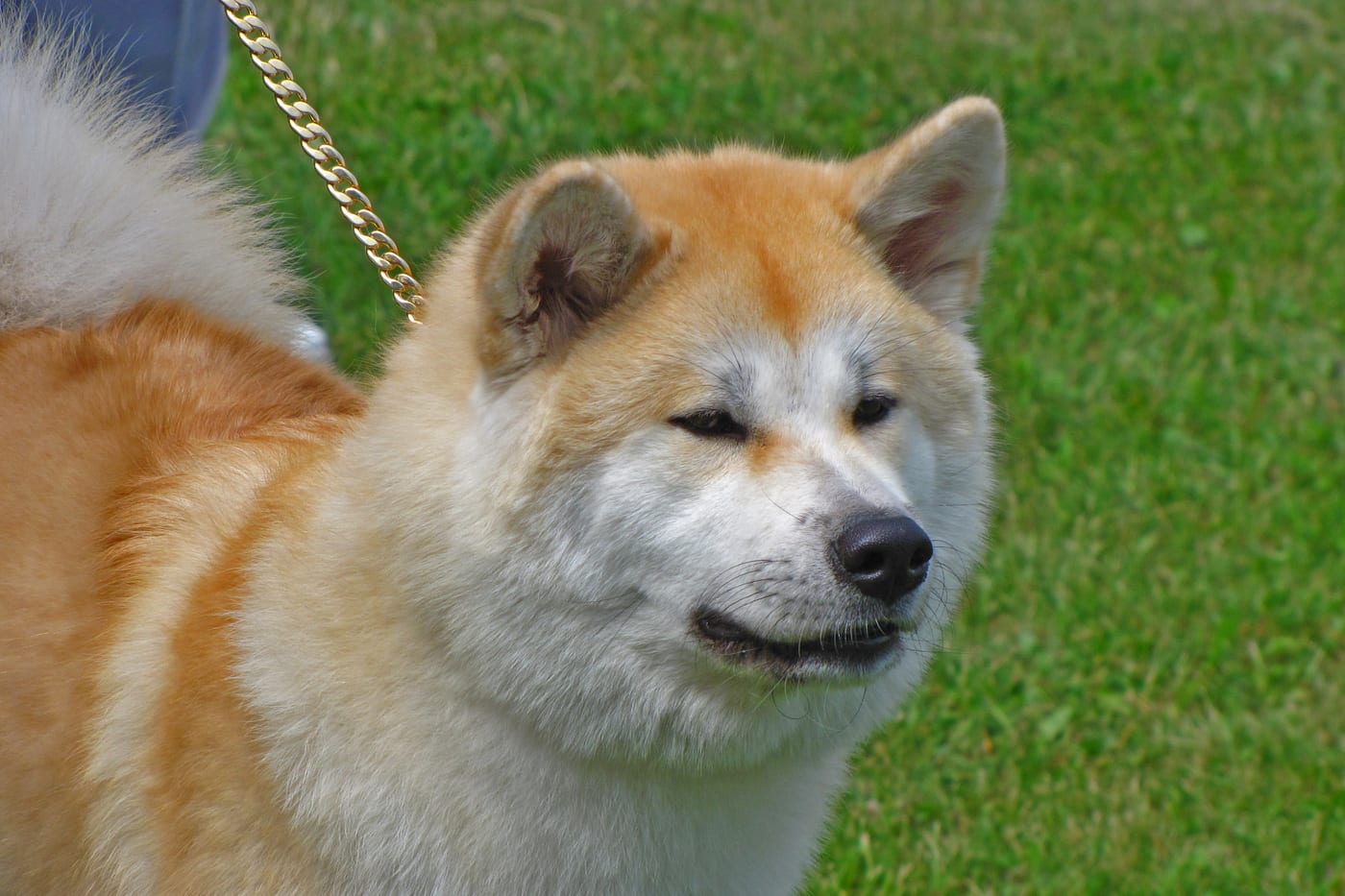
The Akita joined us four years later, after a long period of thought: it's a breed that demands more space, more experience, and more humility. We only welcomed one once we felt ready to give her what she genuinely needs.
Two breeds, and nothing else.
We never crossbreed and we don't add a third breed. Knowing two bloodlines well beats skimming five.
Shiba Inu
The smallest of the six Nihon Ken: quick, so self-groomed it borders on cat-like, deeply attached to its family and aloof with strangers. Its intelligence is real, but it rarely shows up as spontaneous obedience.
Good to know: a strong flight instinct (secure fencing is non-negotiable), heavy seasonal shedding, and the famous "Shiba scream" — a piercing shriek when upset or handled against its will.
Akita Inu
Large, powerful, quiet — a dog that rarely barks but misses nothing. Deeply loyal to its own people, naturally wary of strangers. Made famous by the story of Hachikō, but very different from a classic family dog.
Good to know: can struggle with same-sex dogs, a dramatic coat blow twice a year, and calm, consistent leadership required from a young age. Not recommended as a first dog.
We produce no crossbreeds. Every litter comes from two purebred, health-tested parents, registered with the Canadian Kennel Club (CKC). It's a preservation choice, not a matter of prestige: the standard for these breeds has existed for centuries, and our role is to pass it on intact, not improve on it.
What we screen for, and what we guarantee.
No mating takes place before both parents pass the screenings recommended for their breed. Certificates are handed to you directly — not summarized, not "available on request."
Hips and patellas
Hip X-rays (especially for the Akita) and patella evaluation (especially for the Shiba), on both parents.
Eyes and thyroid
Annual ophthalmologic exam and thyroid panel — hypothyroidism is well documented in the Akita.
Genetic panel
DNA testing for hereditary conditions known in each breed, so we never pair two carriers.
Two-year guarantee against serious hereditary illness, provided in writing. Replacement or refund, your choice.
Come see for yourself before you decide.
We welcome families by appointment, even without a firm plan. You'll see where the puppies are born, meet the parents, and ask the hard questions.
One piece of advice, even if you don't adopt from us: be wary of any breeder who offers to meet in a parking lot or refuses to show you the mother. It's the most reliable red flag there is.